
The Latest Hospital Digital Marketing Articles
GreyMatters is your hospital digital marketing guide, with articles on hospital digital marketing best practices, trends, updates and more.
7 Ways Hospital CMOs Can Build Trust
This article was written for Greystone.Net by Jessica Levco, a freelance healthcare writer and event strategist.
Trust in healthcare has been eroding for years, long before AI entered the conversation. Payers, rising costs, health equity gaps and hospital closures in rural areas have all played a role. Now AI has added a new layer to the trust issue, and health systems are scrambling to keep up.
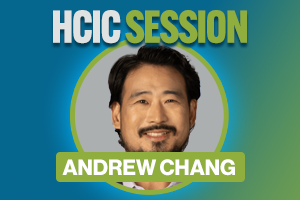
“There are state laws that are being passed all over the place right now about AI, transparency and trust,” says Andrew Chang, Chief Marketing Officer and also leads AI strategy efforts at UChicago Medicine. “Hospital marketers have to make sure that their brand is holding itself to the highest standard when it comes to how AI is being used and earning the trust of patients.”
At #HCIC26, Chang will lead a discussion with Kristy Roldan, VP of Growth at MDRG, about how hospital marketers can earn and rebuild trust. Here’s what Chang is doing at UChicago Medicine, and what other CMOs can learn from it.
Let patients access their records how they want. UChicago Medicine is preparing for a future where patients bypass the hospital portal altogether, using tools like ChatGPT Health or Claude to pull information directly from Epic. Chang says the “digital front door” is one of the worst things hospital marketers promoted. “It paints this picture that everyone has to go through one front door that has to be digital to access healthcare,” Chang says. “You don’t have to shove everyone through a website or portal. That's not how healthcare should work. It should be done on the patient’s terms, not ours.”
Be transparent about AI usage within your hospital. UChicago Medicine uses ambient listening technology in exam rooms, and patients are told about it upfront. The system’s website chatbot follows the same principle. The website has a blue button for chat that’s labeled, “Ask AI.” “The basic premise of trust is be transparent and do what you say you’re going to do,” Chang says. “I know this sounds like an oversimplification of what trust means, but this is what our patients expect.”
Marketers need to be actively involved in any AI rollout. Chang says the CMO’s role is to represent the viewpoint of the patient, community and employees. “Marketing has to be at the table in how AI is rolled out, how it’s being used and how it’s being communicated,” Chang says. “There are so many AI pilots that every health system has, and one slip up could ruin the whole brand’s reputation.”
Adapt to how patients search for information. Patients are searching on Gemini, ChatGPT, Grok, TikTok and Reddit for medical information and advice. UChicago Medicine tracks how often its content gets cited as a source across AI platforms, not just where it ranks in traditional search. The system now leans more heavily into video and earned media to increase the odds of AI models surfacing them as a trusted source.
Focus on doctor-patient relationship stories. Patients may not feel loyal to a hospital system, but they often trust their own doctor. Rather than spotlighting individual physicians directly, UChicago Medicine has been sharing stories that showcase this bond. “We’re highlighting a lot more stories of our clinician and patient engagement,” Chang says. “People won’t necessarily believe what we tell them, but they might believe what others say.”
Edit your website. UChicago Medicine is in the middle of a website overhaul. Chang says they’ve cut thousands of pages to eliminate the kind of duplication and outdated information that undermines trust when a patient or an AI model pulls information from the site. “We use our website content for our own LLM,” Chang says. “If a patient asks a question, they shouldn’t be getting conflicting answers. There should be just one answer.”
Push yourself. Chang sees a marketer’s role bigger than messaging or managing ad campaigns. “I really believe that marketing is a change agent,” Chang says. “If we’re doing our jobs right, marketers should push organizations forward from an innovation standpoint and from a culture change standpoint. Our job is to push boundaries.”